Choosing Deck Side Before You Board
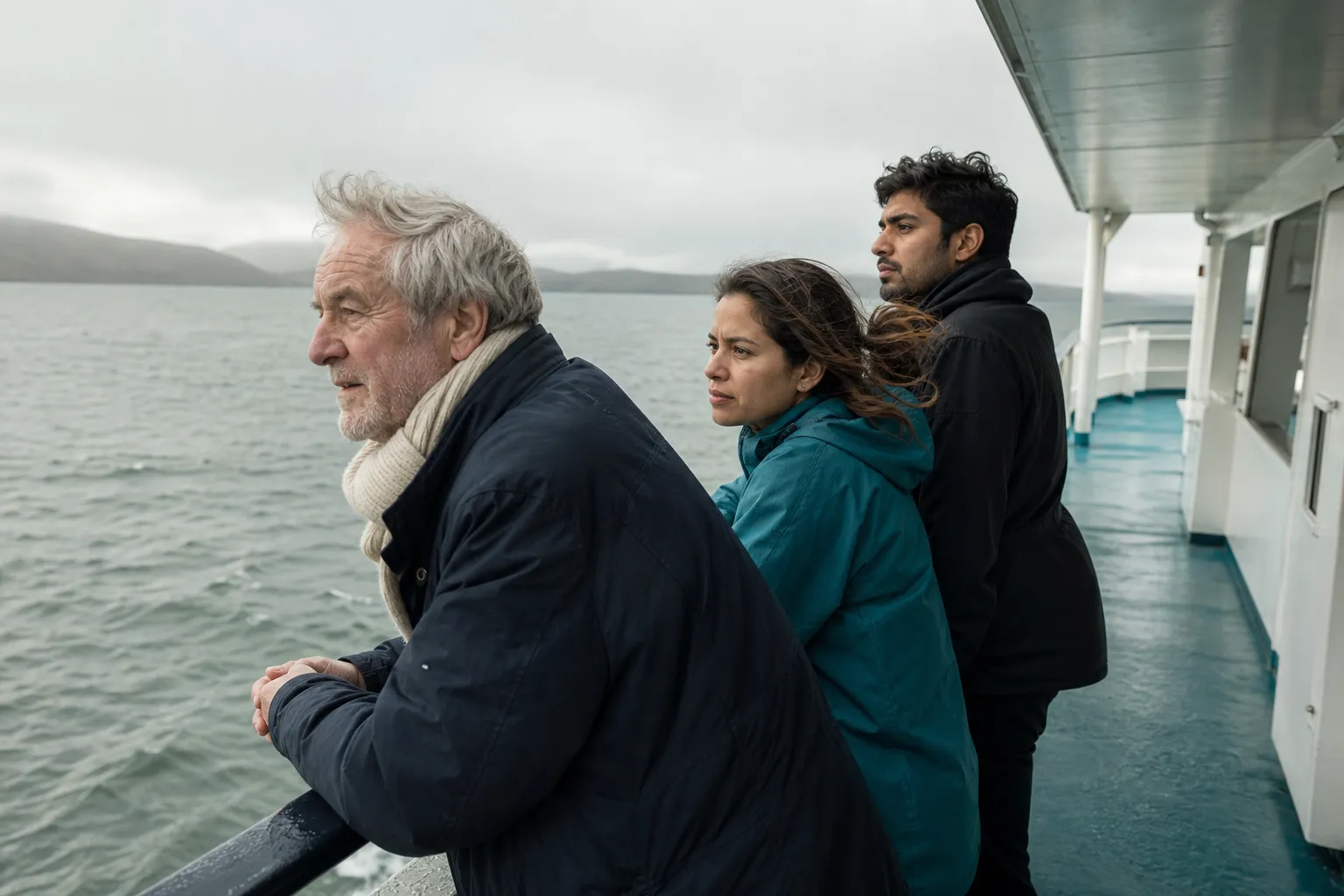
First-time passengers usually grab the rail with the best view. Repeat passengers choose the rail where they can hold a cup, keep their jacket dry, and hear each other speak. The difference between the two rails is not aesthetics — it is wind. And the wind decides almost everything about your time on an open ferry deck.
Windward versus leeward, explained without a compass
The windward side faces the direction the wind comes from. The leeward side faces away. On a ferry, the windward rail catches the full force of the breeze, carries spray from the bow wave, and amplifies every gust until your eyes water. The leeward rail sits in the vessel's shadow and feels noticeably calmer — sometimes so calm that passengers there forget how rough the other side is.
You do not need a weather app to figure out which side is which. Before boarding, stand at the pier and feel where the wind hits your face. On a route that runs roughly perpendicular to the prevailing wind, one rail will be exposed and the other sheltered for the entire crossing. On a route that runs into or away from the wind, neither rail gets much spray, and the choice matters less.
Three factors that decide the better rail
Wind alone does not tell the full story. Experienced passengers weigh three variables before they walk through the gate:
- Wind direction relative to the route. A beam wind — blowing from the side — creates the sharpest contrast between rails. A headwind or tailwind spreads spray more evenly or keeps it forward near the bow.
- Docking orientation. Some vessels dock port-side-to, others starboard-side-to. If you plan to disembark quickly, being on the docking side puts you closer to the exit ramp. On a windy day, however, the docking side is often the exposed side because the port faces the open water at arrival.
- Spray and swell. Even on calm days, a ferry moving at service speed pushes water outward from the hull. The side that faces open sea collects more of that mist. On rougher crossings, green water can come over the rail on the windward quarter, soaking anyone who stayed for the view.
The side with the best photograph is usually the side with the worst jacket. Locals know this. They pick the dull rail, sit with their back to the wind, and arrive at the other end dry.
What regulars actually do
Watch the passengers who board without looking at the scenery. They head straight for the leeward bench, pull a hood or cap low, and settle in with their bag between their knees. They are not being antisocial — they are being practical. A twenty-minute crossing in a stiff wind is long enough to chill you through if you stand exposed on the wrong rail, and it is long enough to soak a bag you left open at your feet.
On longer crossings, some repeat passengers start on one side and move halfway through. This works on ferries that have a clear passageway across the deck, but on smaller vessels where the vehicle deck separates the two rails, switching means going inside, climbing a stairway, and finding a new spot. By the time you move, someone else has taken the sheltered bench.
Indoor versus outdoor: when the deck is not worth it
Not every crossing rewards time on the open deck. When the wind exceeds a moderate breeze, the comfortable half of the deck becomes the only viable half, and it fills quickly. If you cannot find a sheltered spot, the indoor saloon is not a consolation — it is the better option. Many purpose-built passenger ferries have large windows on both sides, and the view is nearly as good without the noise and the spray.
Factors that push you indoors:
- Sustained wind that makes conversation impossible at normal volume.
- Rain mixed with salt spray, which soaks faster than ordinary drizzle.
- Children or companions who cannot brace safely at the rail.
- A bag or device that must stay dry — electronics, printed tickets, a paper map.
- A crossing longer than forty minutes in cold weather, where wind chill exceeds what your clothing can handle.
There is no prestige in standing on deck for the entire crossing if you arrive at the other end cold, damp, and unable to enjoy the next hour. The deck is a tool. Use it when it works, and leave it when it does not.
Choosing before you board, not after
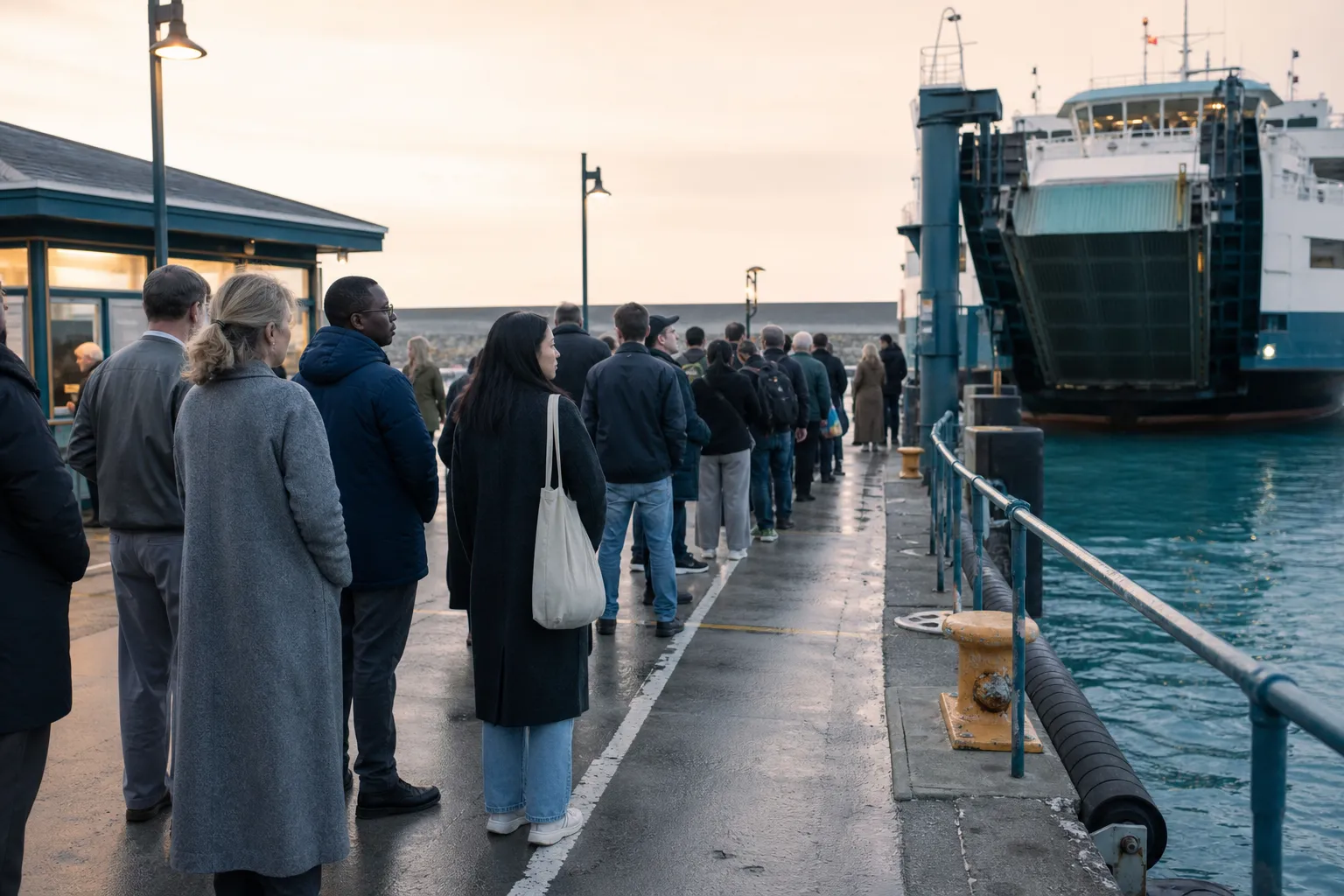
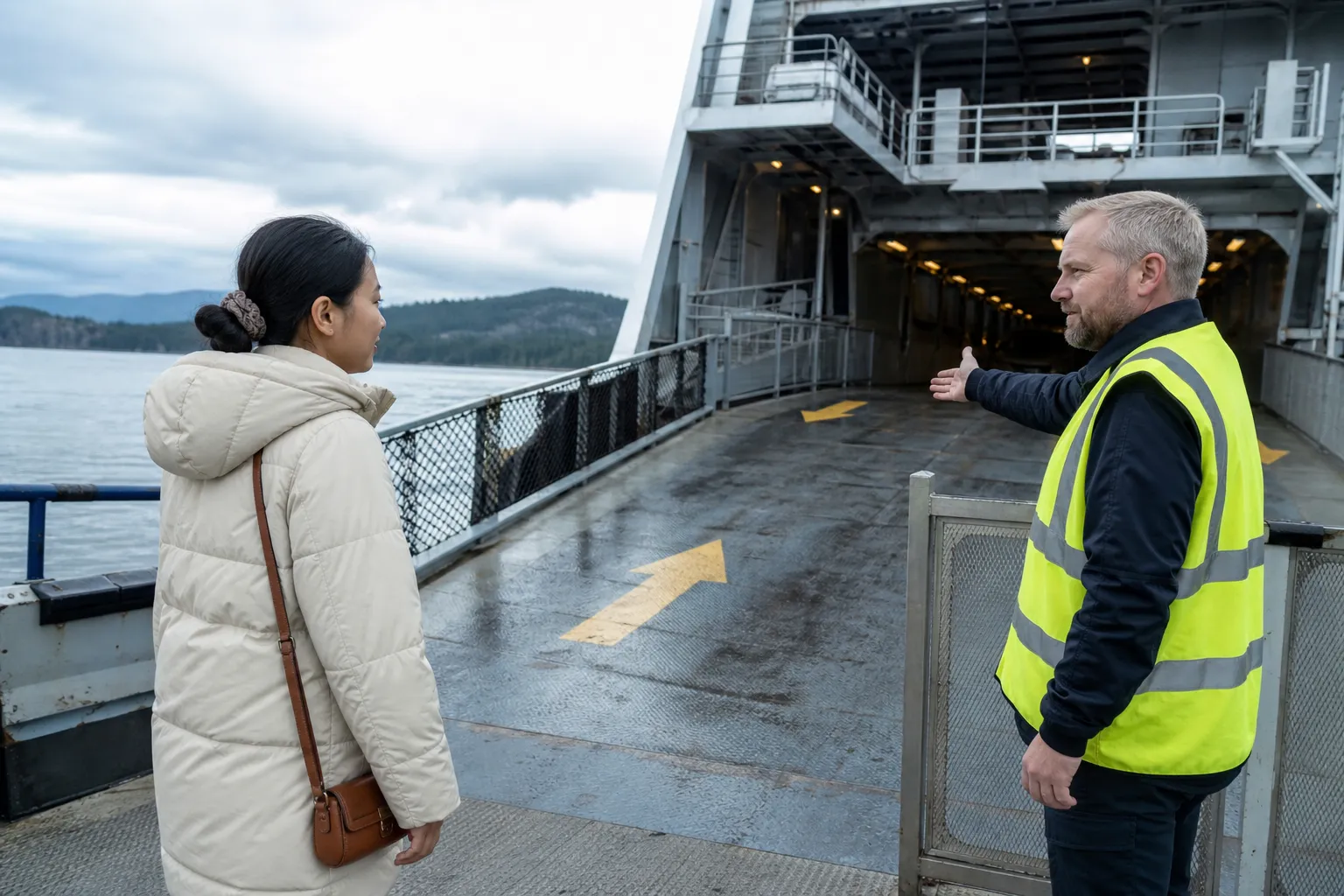
The decision happens at the pier, not on the vessel. Once foot passengers start filing through the gate, the flow moves in one direction and it is difficult to cut across the vehicle lanes to reach the other rail. On some ferries, the crew directs all foot passengers to one stairway, and you end up on whichever side the layout sends you.
To keep your options open, board early enough to move freely before the deck fills. If you arrive late and the crew sends you to a specific companionway, accept it. A crowded sheltered rail is still better than an empty windward one, but the best outcome is choosing before the choice is made for you.
A quick pre-boarding checklist
Before you step through the gate, run through these questions:
- Which direction is the wind coming from right now?
- Will the route keep that wind on one side for most of the crossing?
- Do I need to disembark quickly, and which side docks against the pier?
- Is the wind strong enough that I should go inside instead?
Four questions, answered in under a minute. They will not guarantee a perfect crossing, but they will keep you off the rail that locals already know to avoid.