Planning Your First Walk-On Crossing
Your first walk-on crossing does not need bravery. It needs a rehearsal plan: what to keep in hand, which questions to ask at the window, and how to leave room after landing for whatever the pier changes.
Rehearsal beats guessing
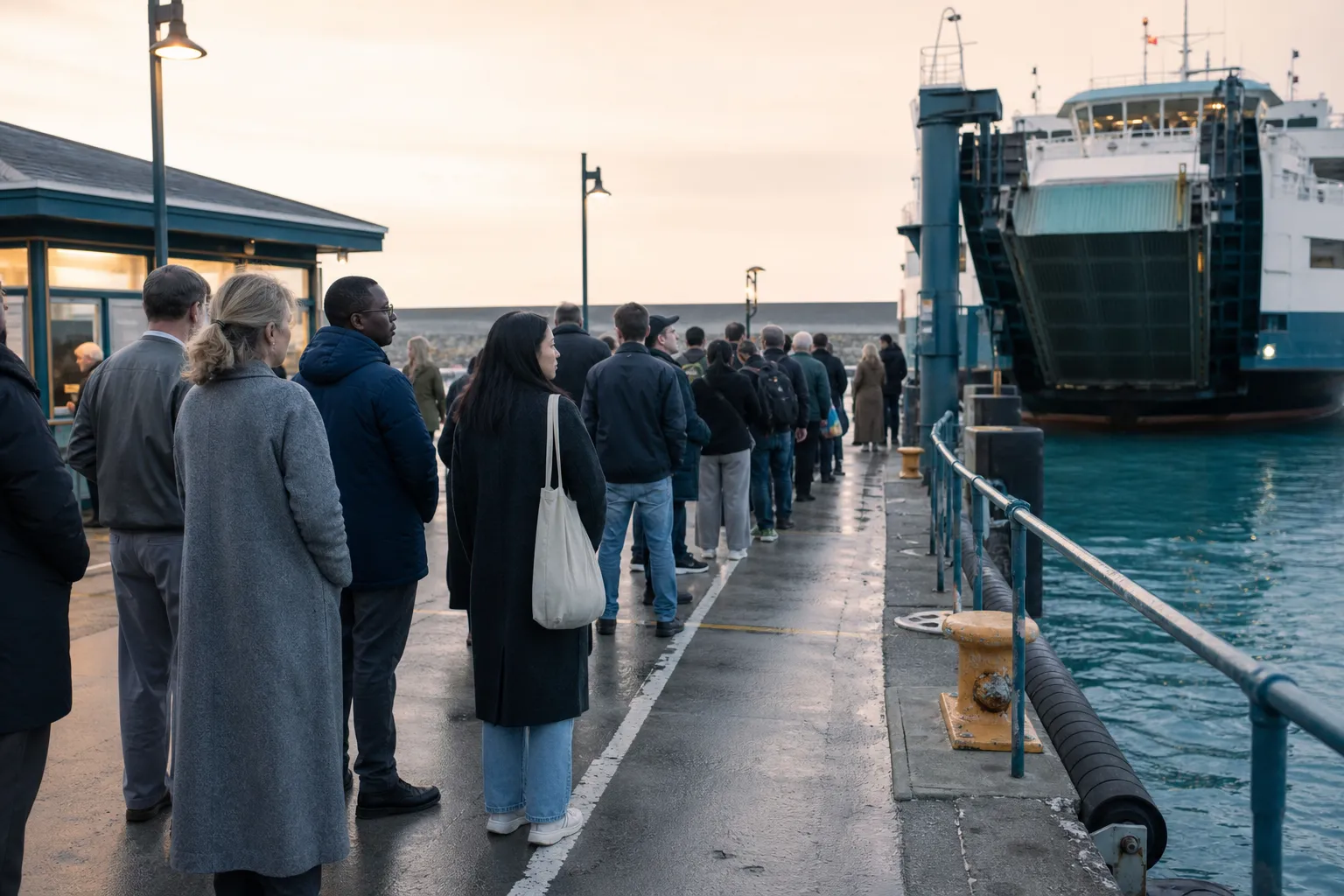
First-time passengers often treat the printed departure time like a single deadline. In practice, the boarding sequence is the real schedule, and it starts at the moment the ramp can move. When you plan for the sequence, you plan for the part you control: arriving with slack, keeping essentials accessible, and confirming the hour after landing.
A small plan you can follow calmly beats a bold plan you improvise in a crowded line.
Your plan in three checks
Before you travel, run through these checks. They do not guarantee an easy crossing, but they remove the most common first-timer problems: arriving in the wrong window, losing time searching for a document, and realizing too late that your landing connection needs a backup.
- Decide your arrival window using the boarding flow, not the screen time. Give yourself enough slack to reach the holding area and still answer one question if the gate changes.
- Pack with the assumption that you might move seats or stand in a different spot. Keep the items you need immediately where you can reach them without unzipping your whole bag.
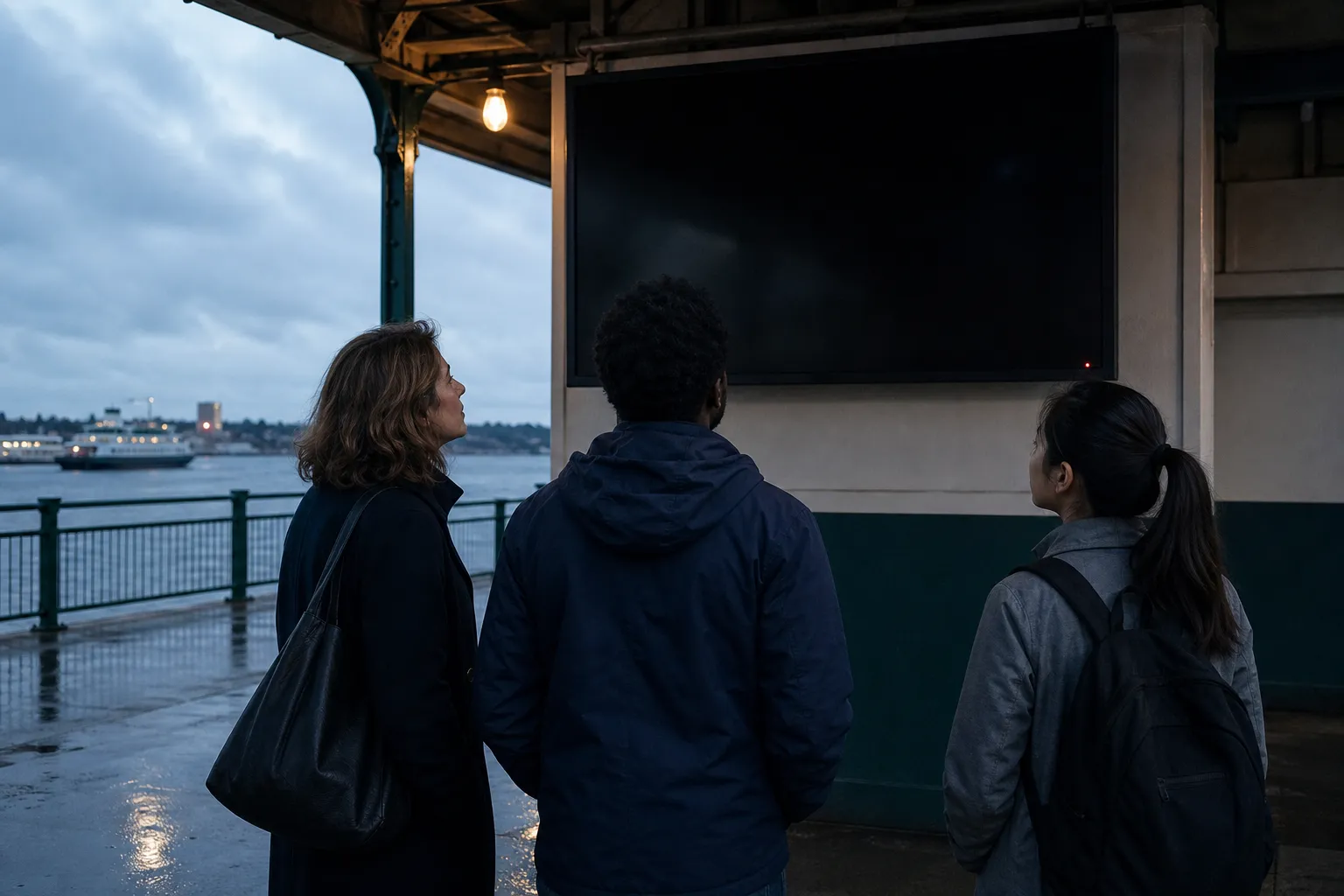
- Confirm your connection after landing early enough that the plan can flex. If the sailing shifts, you want options that do not require running with no clearance.
Pack in hand: the essentials you do not want to hunt for
When the ramp is active, you do not have time for careful digging. Keep a small "in hand" set so you can keep moving when others hesitate or re-check their bags.
- Your ticket and any confirmation message in a place you can open in one motion.
- One layer you can adjust quickly if wind changes on the deck.
- A small container for liquids or small items that must stay with you at boarding.
- What you need for the first hour after landing: keys, a phone charger if relevant, and a note with your next pickup details.
- Any medical or accessibility item you need immediately, so you do not postpone it until you are already seated.
Ask these questions at the window
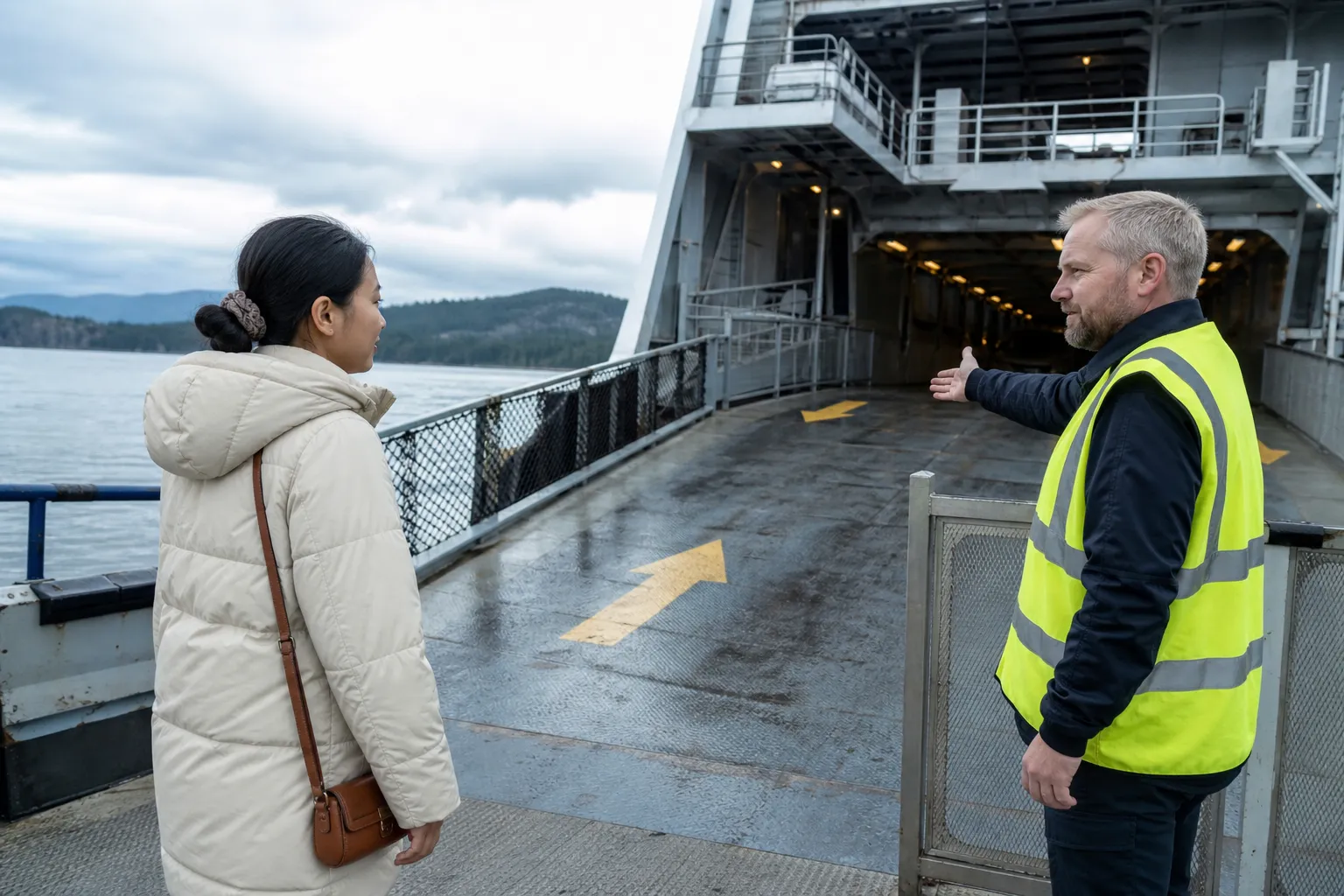
The boarding line moves, but a crew member or counter staff can still clarify the sequence. If you ask the right questions, you reduce the chance that someone directs you back against the flow.
- Which boarding queue applies to walk-on passengers today?
- Where will foot passengers stand once the ramp opens on this sailing?
- Are there any baggage or bag-stowing rules you should follow right now?
- If the sailing changes, what is the next step you should follow immediately?
Choose a deck spot that fits your landing plan
Deck comfort is not only about view. It is about what happens after arrival: how quickly you can reach the ramp when the crew releases passengers, and how easy it is to keep your bag out of the passageway. Pick a spot where you can stand and move without blocking others, especially if there is a vehicle shuffle or a delayed docking.
Weather and cancellations: keep one backup inside your plan
Ferries are weather sensitive. Wind and swell can change docking procedure and create boarding changes that feel sudden. Your best protection is a plan that already includes a backup connection strategy and a way to keep essentials accessible while you wait.
If you expect the possibility of cancellation, confirm the landing connection and the next step you will take if the board changes. Then use the terminal time for essentials, not for complex re-planning.
Leaving room after landing is the quiet success step
Many first-timers arrive at the far side and realize their connection needs more buffer than they planned. Even if your sailing runs perfectly, the ramp sequence and the walk-off can shift by minutes. Leave room so you can adapt without stress.