What to Do When a Sailing Is Cancelled
Cancellations often arrive with little warning and no apology. The goal is not to argue with a board; it is to protect the next step after landing and keep the rest of the day workable.

Cancellations feel personal because your plan does
Boards update when operations change: weather, traffic on the route, or a schedule adjustment at the far port. Your ticket is the plan, but the ramp schedule is the reality. Treat the cancellation as a prompt to switch from "what I booked" to "what the pier can accept next."
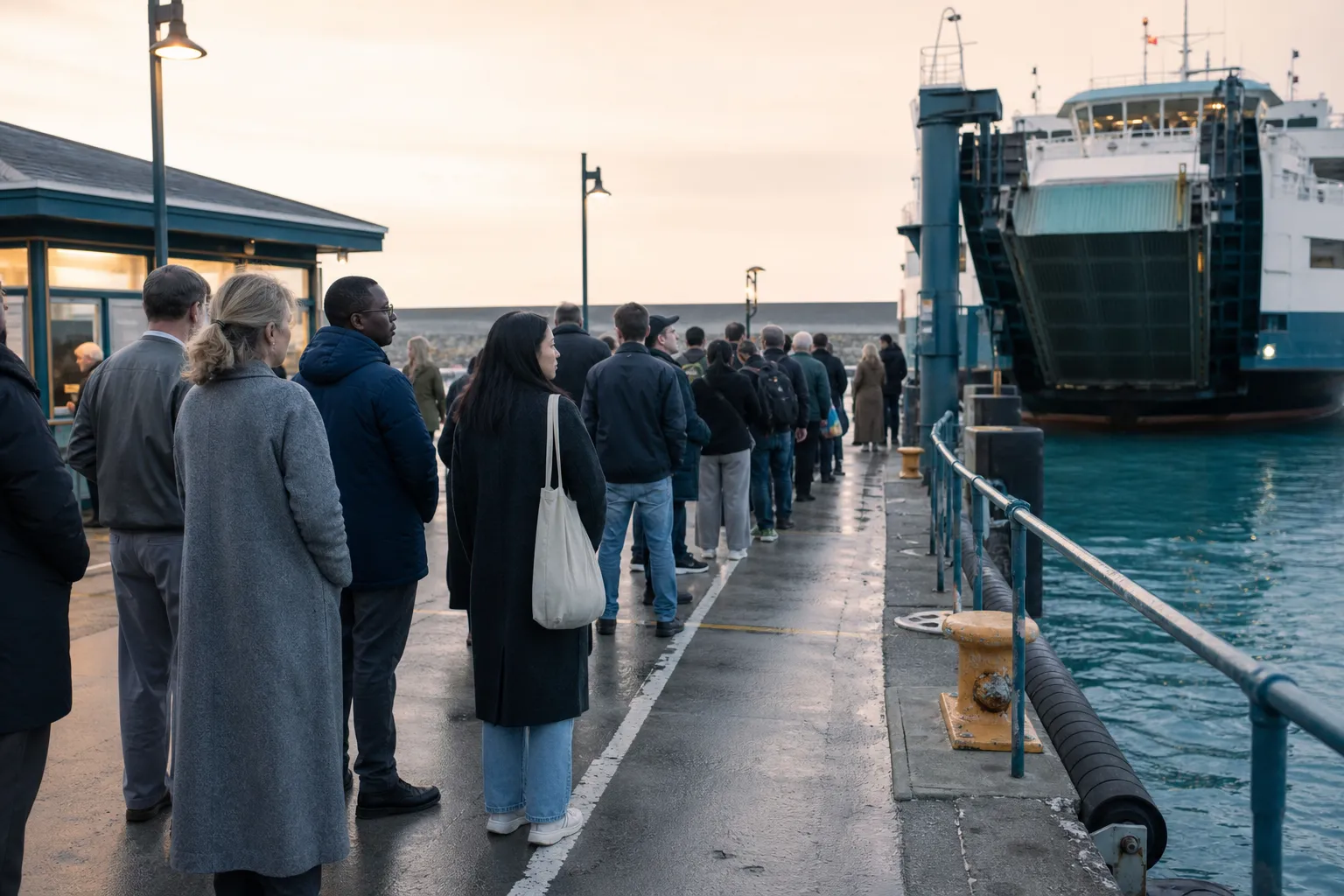
The cancellation is not the end of the day. It is the moment you stop following the departure clock and start following the boarding sequence that is still running.
The first ten minutes: confirm, document, redirect
If you do only one thing, do this: make sure you know the next sailing that will actually load you. Rumors spread fast in terminals, especially when people are tired and waiting in lines.
- Look at the departure board and find the updated notice for your route, not a general "delayed" message.
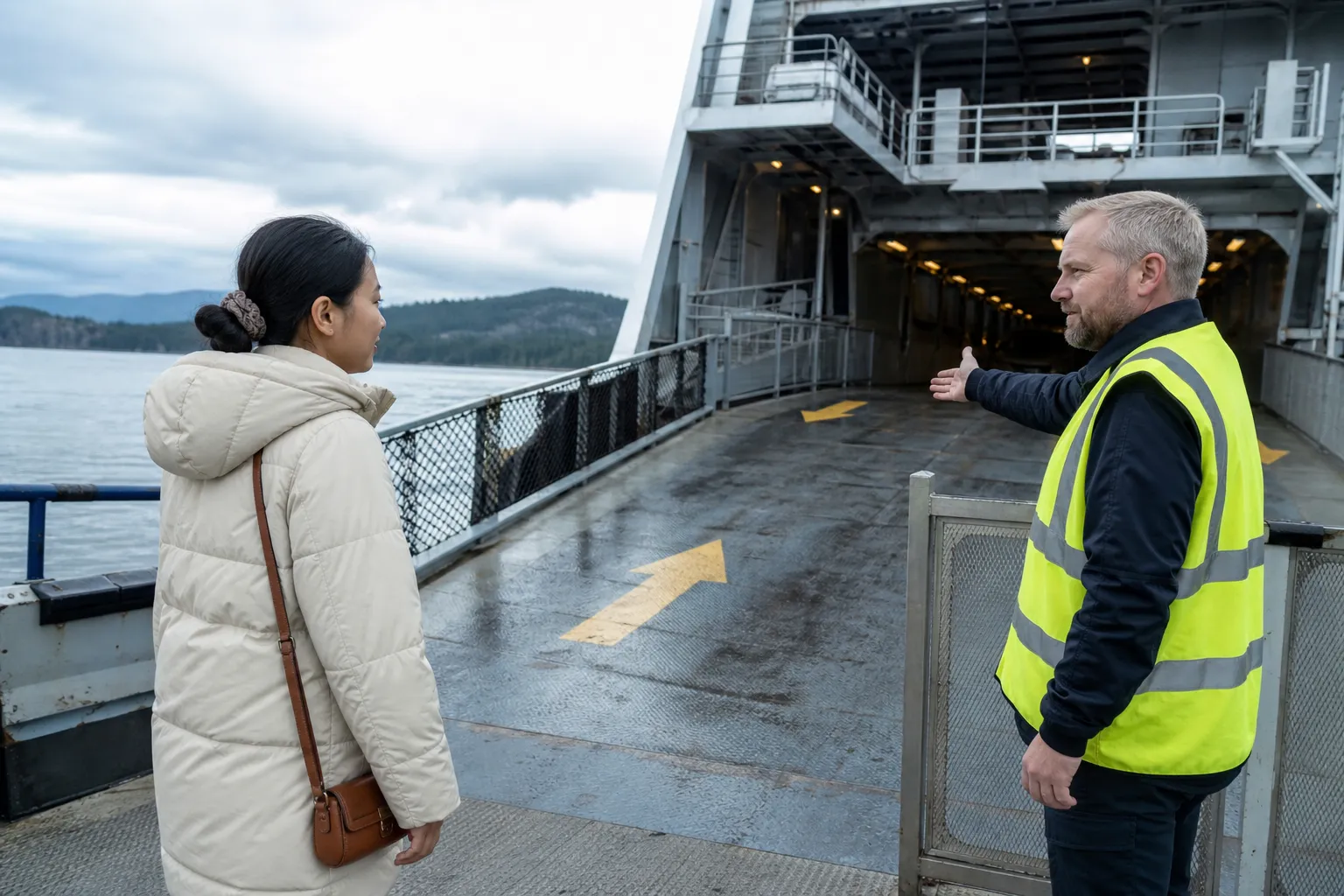
- Ask the crew (or the ticket counter) which changes apply to your passenger type: walk-on versus vehicle lane, boarding gate, and the holding area.
- Write down the next sailing time as shown for your next step, then note the arrival port you will reach after that sailing.
- Before you queue, protect the connection on the far side (pickup, next ferry, shuttle, or the hour you need on arrival).
Protect your landing connection before you wander away
A cancellation creates a chain reaction. Even if the next sailing boards smoothly, your landing connection can fall apart if the arrival timing and baggage rules change.
- Reconfirm any onward transport immediately. Ask whether they still meet you if the hour shifts, and what happens if the sailing changes again.
- Check whether luggage handling or boarding windows differ for the replacement sailing. If baggage must be stowed earlier, you will want that info before the line tightens.
- For vehicle crossings, verify how cars will unload and where the lane closes during arrival. A delayed vehicle turn can push pedestrians and cars into different flows.
- Leave a small buffer block after landing so you can adjust without rushing through your connection while upset.
Repacking: keep a "day in hand" option
When the next sailing is announced, you will often have just a short window before people move. If you packed for the original departure, you can end up hunting for essentials while the terminal compresses around you.
Use the switch time to create a day-in-hand set: the items you need on board to stay comfortable, and the documents you might show at the counter if your ticket details update. Keep your hands free for queues, gates, and stairs.
When you get rebooked: confirm the new boarding plan
If you have a replacement ticket or a change notice, do not assume it means the same boarding sequence. The crew may load a different portion first or direct passengers to a different holding point based on how the vessel turns around at the pier.
- Confirm your reservation details match the updated sailing time and date on the notice.
- Ask which boarding order applies to your passenger type and where you will stand once the ramp opens.
- Ask for the ramp close window for your day and use that to decide when you should re-enter the terminal line.
A calmer mindset for a day that changes
The most helpful trait during cancellations is not speed; it is clarity. You do not need to "win" the terminal. You need to choose the next running step, keep your essentials accessible, and confirm the hour after landing so your connection can survive the swap.